Ready to quit?
Download the CraveLess.Me app and start your journey today.


Why Do I Smoke More When I Drink? (And How to Stop)
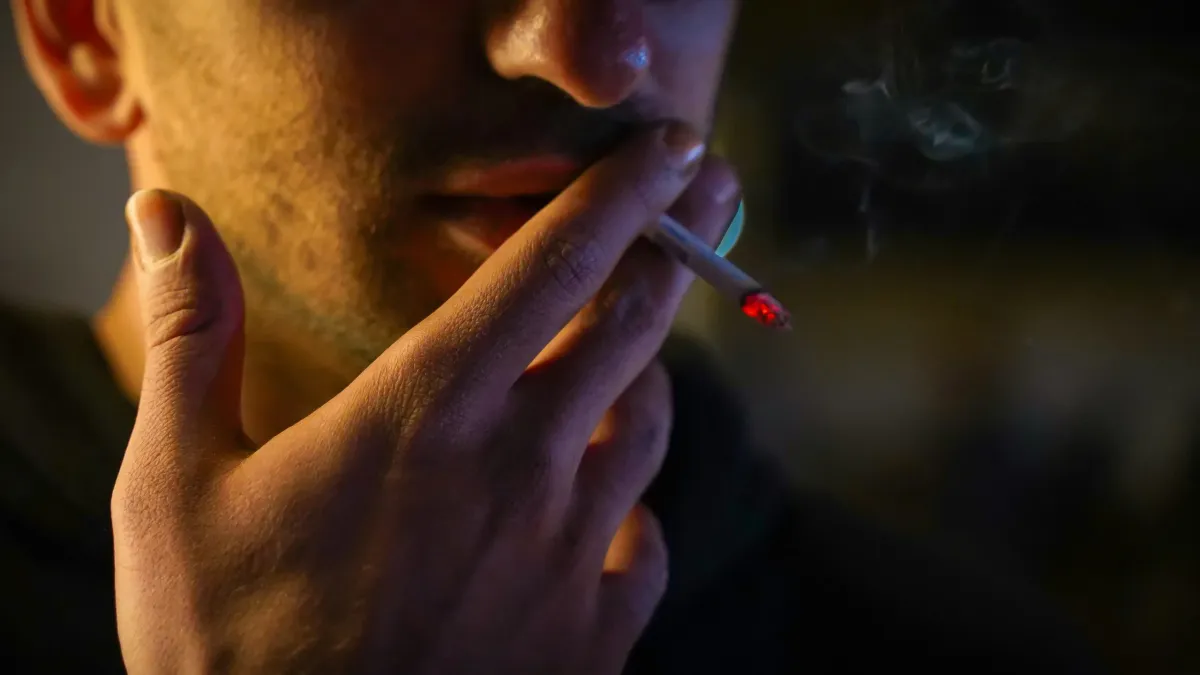
You pour a drink, and almost without thinking, your hand reaches for a cigarette. If you’ve ever wondered, “Why do I smoke so much when I drink?” you’re not alone. This powerful link between alcohol and smoking isn’t just a bad habit—it’s a complex interaction rooted in your brain chemistry, environment, and learned behavior. Understanding why it happens is the first step to gaining control and breaking the cycle for good.
The Science Behind the Craving: Why Alcohol Makes You Want to Smoke
It feels like a simple craving, but there’s a neurochemical tug-of-war happening in your brain when you mix drinking and smoking.
1. Alcohol Lowers Your Inhibitions
Alcohol is a depressant that slows down your brain's prefrontal cortex, the area responsible for judgment, self-control, and decision-making. When this system is impaired, your willpower to resist a cigarette weakens significantly. The “I shouldn’t” voice gets quiet, and the “Why not?” impulse gets louder.
2. A Double Hit of Dopamine
Both nicotine and alcohol trigger the release of dopamine, the brain’s “feel-good” chemical. When you combine them, they can create a synergistic effect, making the reward feel stronger than either substance alone. Your brain starts to link the two activities, reinforcing the behavior every time you do them together.
3. Cross-Tolerance and Cravings
Research suggests that alcohol can actually intensify nicotine cravings. Some studies propose that alcohol temporarily increases nicotine receptors in the brain, making you physically crave a cigarette more intensely when you drink.
Beyond Biology: The Behavioral Triggers
The science explains the urge, but your environment and habits solidify the pattern.
The Social Smoke
Bars, parties, and patios are classic settings where drinking and smoking coexist. In these social situations, you’re exposed to visual cues (seeing others smoke), and you may feel subtle peer pressure to join in. The behavior becomes a normalized part of the social ritual.
The Conditioned Response
This is classic Pavlovian conditioning. If you regularly have a cigarette with your beer or whiskey, your brain forms a powerful association. The drink becomes the “bell” that triggers the “salivation” for a smoke. Soon, one automatically makes you think of the other.
The Hand-to-Mouth Habit
Both activities involve a similar hand-to-mouth motion and provide oral stimulation. When you remove one (the drink), the habit loop seeks completion, often leading you to reach for a cigarette to fill the physical void.
5 Practical Strategies to Smoke Less When You Drink
Breaking this link is challenging but entirely possible. Don’t try to tackle everything at once. Start with one or two of these actionable strategies.
1. Change Your “First Move”
Disrupt the automatic ritual. When you have your first sip of a drink, make your next action something other than lighting up. Take out your phone and text a friend, take a deliberate sip of water, or eat a small snack. This breaks the initial conditioned response.
2. Engineer Your Environment
Reduce temptation by controlling your surroundings. For a while, choose smoke-free venues. If you’re at home, don’t leave cigarettes or lighters on the patio or near your drinking area. Make smoking inconvenient.
3. Use a Delay Tactic
When a craving hits, tell yourself you’ll wait 10 minutes. Often, the intense wave of the craving will pass. During that time, distract yourself: check the news, play a quick game on your phone, or start a conversation. This practice strengthens your “pause” muscle.
4. Find a Physical Substitute
Give your hands and mouth something else to do. Hold a stress ball, play with a pen, or drink through a straw. Snack on crunchy vegetables, sunflower seeds, or sugar-free gum. This addresses the sensory component of the habit.
5. Modify Your Drinking (Temporarily)
If you’re serious about cutting back on smoking, consider changing your drinking habits as a short-term experiment. Try switching to a different type of drink you don’t associate with smoking, or consciously reduce your alcohol consumption for a few weeks. This can weaken the established neural pathway.
When to Seek Extra Support
If you’ve tried self-managing and the link remains strong, it’s a sign of how powerful the connection is—not a personal failure. Consider:
- Nicotine Replacement Therapy (NRT): Using a patch, gum, or lozenge can provide a steady dose of nicotine, smoothing out the intense cravings triggered by alcohol.
- Speaking with a Doctor or Counselor: They can provide personalized strategies, prescribe medications like varenicline (Chantix) or bupropion (Zyban), or recommend behavioral therapy.
- Support Groups: Connecting with others working on the same goal, in person or online, provides accountability and reduces the feeling of going it alone.
Key Takeaway
Smoking more when you drink is a common and scientifically explainable pattern, driven by brain chemistry, environment, and learned habits. You can break it by understanding your triggers and systematically replacing the old routine with a new one. Start small, be patient with yourself, and remember that each time you disrupt the cycle, you weaken its power.
Frequently Asked Questions
Does alcohol make nicotine cravings worse?
Yes, for many people. Alcohol can lower inhibitions and may temporarily increase the number of nicotine receptors in the brain, leading to more intense physical cravings for a cigarette.
Is it harder to quit smoking if you drink?
It can be, because the two behaviors are so deeply linked. Many people find it helpful to moderate their drinking or avoid triggers early in their quit attempt. Tackling one habit at a time is often a successful strategy.
Why do I only crave cigarettes when I drink?
This is likely due to a strong conditioned response. Your brain has learned to associate the two activities. The sights, smells, tastes, and social context of drinking act as powerful cues that trigger the urge to smoke.
Can I ever drink again without wanting to smoke?
Absolutely. With time and consistent practice of new habits, the link can weaken significantly. The goal isn't necessarily lifelong abstinence from alcohol, but creating a new, healthier association with it.
CraveLess.Me Team
Empowering individuals to reclaim their health and freedom from nicotine through science-backed strategies, innovative technology, and compassionate support.